Industrial Furniture: Raw, Bold Pieces for an Urban-Inspired Home
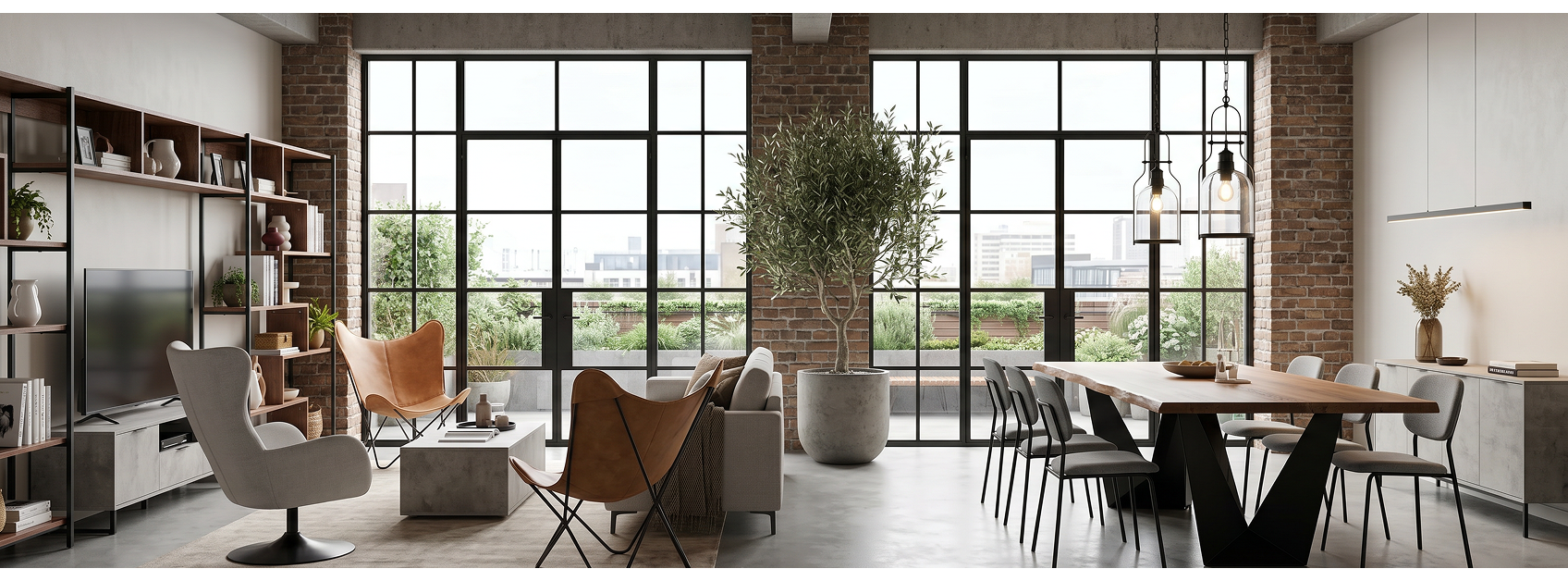
Industrial style comes from old city factories and warehouse lofts where spaces stayed raw, open, and practical. It focuses on exposed structure, natural materials, and a no-fuss approach that keeps everything honest and real. Today, many people choose this style because they want interiors that feel spacious, urban, and full of character. You often see metal, wood, and concrete working together in a simple, balanced way. The look feels relaxed and slightly rugged, but still intentional and designed, like a space you actually want to live in.
What are the mandatory ingredients for a modern Industrial interior?
Industrial style is less about decoration and more about honesty. If a space shows you how it's built — the bolts, the welds, the pipework - and leans on raw, hard-working materials instead of soft finishes, you're on the right track. It grew out of disused factory and warehouse buildings that got turned into homes, and that origin still defines the look.
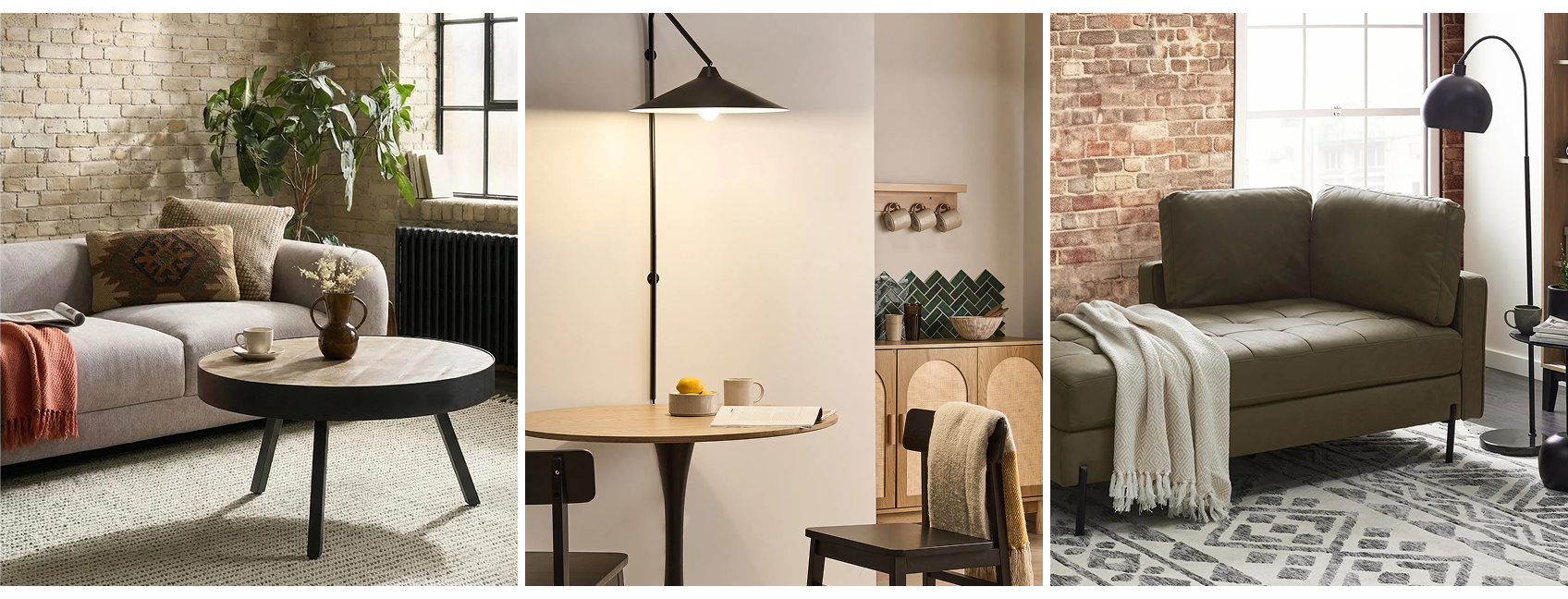
- Exposed materials – visible pipes, beams, and ducts acting as raw, industrial design features.
- Raw concrete and brick – unfinished surfaces bringing texture, weight, and authentic character to the space.
- Metal accents – steel and iron details providing strength and sharp contrast against wood.
- Open floor plan – wall-free layouts enhancing natural light, movement, and flexible furniture placement.
- Industrial lighting – factory-inspired fixtures featuring metal pendants, simple shades, and exposed bulbs.
- Worn and weathered – subtle scuffs, patina, and rust signs adding crucial age and character.
What is the colour palette of industrial-style furniture?
Picture the inside of an old workshop: grey concrete, dark metal, exposed brick and the warm brown of timber. Industrial colours are muted, grounded and a little moody. They sit in two loose groups:
- The hard base: charcoal, slate grey, black and raw concrete grey carry the bulk of the scheme across metal frames, walls and larger pieces. They give the room its serious, utilitarian backbone.
- The warm layer: rust, terracotta, tan leather, aged brass and warm timber browns soften the greys and stop the room from feeling cold. A flash of brick red or copper brings the space to life without breaking the mood.


What materials should you look for?
Industrial rooms work because of the tension between hard and soft, rough and refined. Don't be afraid to combine the materials below — the more contrast in texture, the more the look comes together.
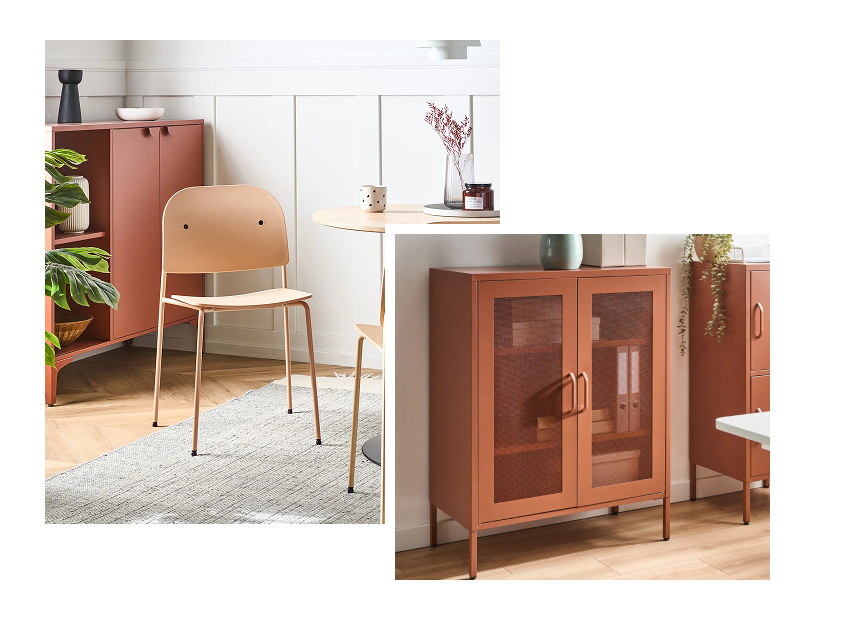
Metal
The signature of industrial design. Steel, iron and aluminium turn up everywhere: table legs, shelving frames, chair bases, bed frames and lighting. Look for raw, blackened, gunmetal or powder-coated finishes rather than anything shiny. Exposed bolts, rivets, welds and brackets are a plus, not something to hide. Aged brass and hammered copper work well as warmer accents on handles, lamps and smaller pieces.
Metal
The signature of industrial design. Steel, iron and aluminium turn up everywhere: table legs, shelving frames, chair bases, bed frames and lighting. Look for raw, blackened, gunmetal or powder-coated finishes rather than anything shiny. Exposed bolts, rivets, welds and brackets are a plus, not something to hide. Aged brass and hammered copper work well as warmer accents on handles, lamps and smaller pieces.
Wood
Keeps industrial spaces from feeling cold and clinical. Reclaimed and recycled timber is ideal — old scaffold boards, salvaged beams, weathered planks with visible grain, nail holes and colour variation. It's most often paired with metal: a thick wooden tabletop on a steel base, timber shelves on iron brackets, a reclaimed-wood sideboard. The more honest and used the wood looks, the better it fits.
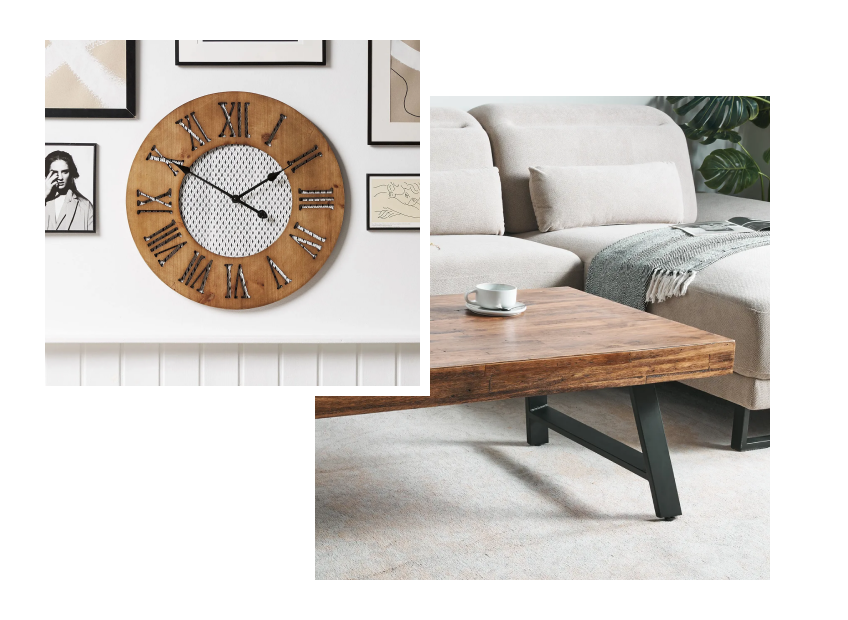
Wood
Keeps industrial spaces from feeling cold and clinical. Reclaimed and recycled timber is ideal — old scaffold boards, salvaged beams, weathered planks with visible grain, nail holes and colour variation. It's most often paired with metal: a thick wooden tabletop on a steel base, timber shelves on iron brackets, a reclaimed-wood sideboard. The more honest and used the wood looks, the better it fits.
Concrete and stone
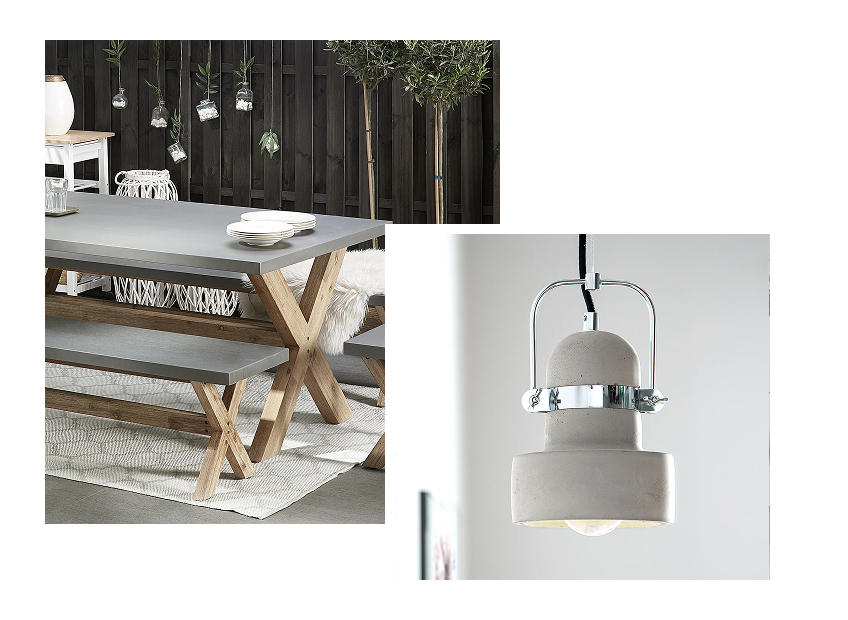
Material that is about as industrial as it gets - cool, grey and unapologetically hard. It shows up on floors, walls, worktops and increasingly in furniture like coffee tables, side tables and lamp bases. Polished or raw, it brings a grounded, structural weight that anchors a room. Stone and exposed brick play a similar role, adding texture and that converted-warehouse feel.
Concrete and stone
Material that is about as industrial as it gets - cool, grey and unapologetically hard. It shows up on floors, walls, worktops and increasingly in furniture like coffee tables, side tables and lamp bases. Polished or raw, it brings a grounded, structural weight that anchors a room. Stone and exposed brick play a similar role, adding texture and that converted-warehouse feel.
Leather
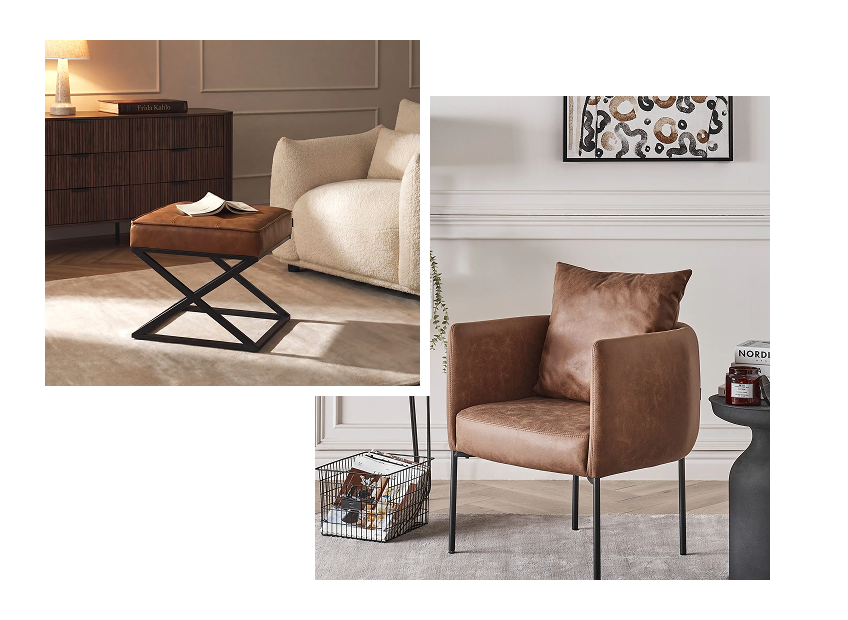
Brings warmth and comfort to an otherwise hard-edged look, and it should look like it's been broken in. It works best on seating: aniline and tan club chairs, chesterfield sofas, bar stools and bench tops. The appeal is that it ages well, picking up scuffs and patina that suit the industrial mood perfectly. If you'd rather avoid animal products, vegan leather gives you a similar tone and texture, though it won't develop the same worn character over time.
Leather
Brings warmth and comfort to an otherwise hard-edged look, and it should look like it's been broken in. It works best on seating: aniline and tan club chairs, chesterfield sofas, bar stools and bench tops. The appeal is that it ages well, picking up scuffs and patina that suit the industrial mood perfectly. If you'd rather avoid animal products, vegan leather gives you a similar tone and texture, though it won't develop the same worn character over time.
How do you stop an industrial room from feeling cold?
This is the question that trips people up most, and it's an easy trap to fall into. Left to its own devices, a room full of steel, concrete and bare brick can drift from raw and characterful into something echoing and unwelcoming. Industrial style comes alive the moment you let a little warmth push back against all that hard surface. Think of it as a balancing act: for every cold, hard element, give the room something soft, warm or living to answer it.
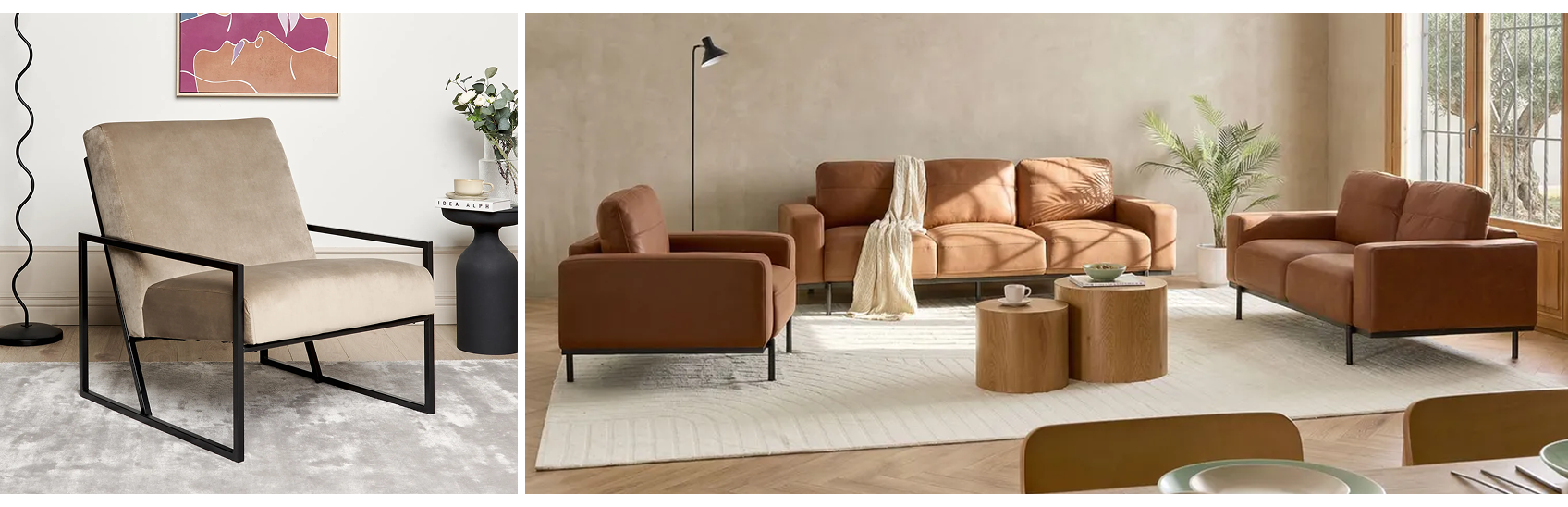
- Bring in wood and leather – Incorporating a reclaimed-timber tabletop or a well-worn leather armchair instantly warms up grey and black tones while adding a rich sense of history to the space.
- Layer soft textiles – Piling on a chunky wool throw, a few linen cushions, and a deep-pile rug breaks up the hard edges underfoot, instantly transforming a clinical showroom into a welcoming home.
- Let things grow – Introducing greenery, such as trailing plants spilling off metal shelving or a large leafy specimen in a bare corner, is the fastest way to soften and warm up an industrial space.
- Warm up the lighting – Swapping cold white bulbs for warm-toned Edison-style lighting is a quick five-minute change that completely shifts the overall mood of the room from clinical to inviting.
- Introduce warm metals – Incorporating aged brass and hammered copper accents allows you to retain a metallic edge while creating a much softer, more lived-in feel than steel and black iron alone.
Why is lighting so important in industrial design?
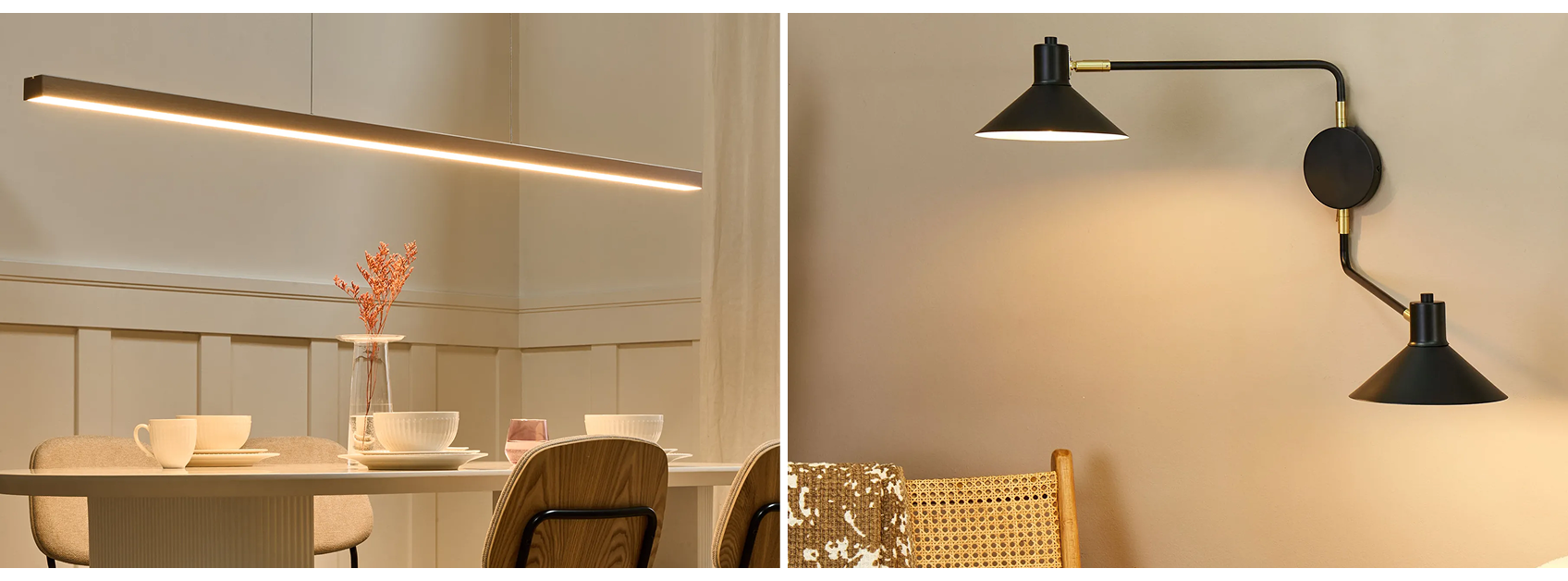
Lighting isn't an afterthought in industrial style — it's one of the defining features. Old factories ran on bare, functional fixtures bolted wherever they were needed, and that practical look has become a signature of the whole aesthetic. Get the lighting right and a room reads as authentically industrial; get it wrong and even the best furniture falls flat.
The fixtures that define the look
Industrial lighting is meant to be seen, not hidden behind shades and diffusers. These are the classics worth knowing:
- Edison-style filament bulbs: exposed, warm-glowing bulbs that show off the filament. The single most recognisable industrial lighting detail.
- Metal cage pendants: bulbs wrapped in a steel or black-iron cage, originally designed to protect them on a factory floor.
- Articulated task lamps: adjustable desk and wall lamps with visible joints, springs and arms — functional and sculptural at once.
- Gantry and track lighting: rows of directional spots on a metal rail, echoing the lighting rigs of old workshops.
- Oversized pendants and pulley lights: large dome shades or counterweight fixtures that make a statement over a table or island.
How to light a room the industrial way?
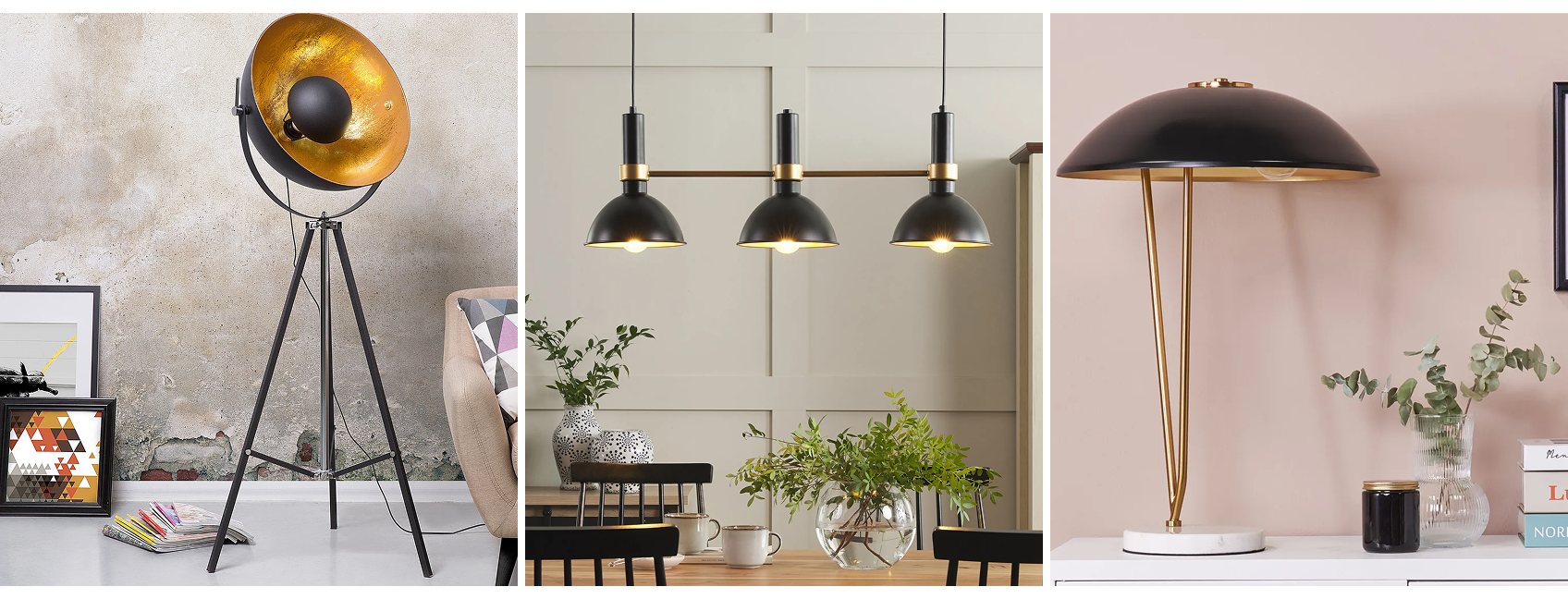
The fixtures matter, but so does how you arrange and power them. A few principles keep the whole scheme cohesive:
Layer your light sources
Avoid relying on a single overhead fitting - it flattens the room and kills the atmosphere. Build up several layers instead:
- A pendant over the dining table or kitchen island as the anchor.
- A floor lamp in a corner to add height and fill the shadow.
- A directional wall or task light beside seating and work areas.
Keep the temperature warm
- Choose warm-toned bulbs (around 2200–2700K) — cold white light makes industrial spaces feel clinical rather than characterful.
- Warm light flatters the brass, copper, leather and timber that soften the look.
Let the hardware show
- Pick fixtures in blackened steel, gunmetal, aged brass or copper.
- Leave flex, cables and fittings on display rather than chasing them into the wall - exposed cabling is part of the charm.
What other styles pair well with industrial?
Industrial can read as cold and severe on its own, so it tends to come alive alongside one or two warmer styles. Mix it sensibly, and you'll avoid the bare-warehouse look. Go for:
- Rustic: solid timber, linen and natural fibres bring warmth and soften all that metal and concrete. A natural, forgiving pairing — especially in kitchens and living rooms.
- Scandi: pale woods, clean lines and plenty of light calm down the heavier industrial elements and keep a space from feeling gloomy.
- Mid-century modern: clean shapes, tapered legs and warm woods sit comfortably against metal and leather without competing for attention.
How do I bring industrial style into my home?
You don't need to gut the place or knock through to brick. Industrial works well in small doses, so you can start with one room or even a single corner. Here are some tips:
- Lead with one statement metal piece – Pick a big item like a steel shelving unit or an iron bed frame, and build the rest of your room around it.
- Bring in exposed lighting – Use Edison bulbs, cage pendants, or metal task lamps to easily set the right industrial mood.
- Mix hard with soft – Pair cold concrete and metal with leather, linen, and a chunky rug so the room feels cosy rather than bare.
- Add reclaimed wood – Pop in a salvaged-timber shelf or tabletop to instantly warm up all the heavy greys and blacks.
- Leave a little raw – An exposed brick wall or a visible pipe adds some real authenticity without the need to over-finish everything.
- Don't over-style – Keep things functional and a bit utilitarian, so resist the urge to fuss over every single detail.